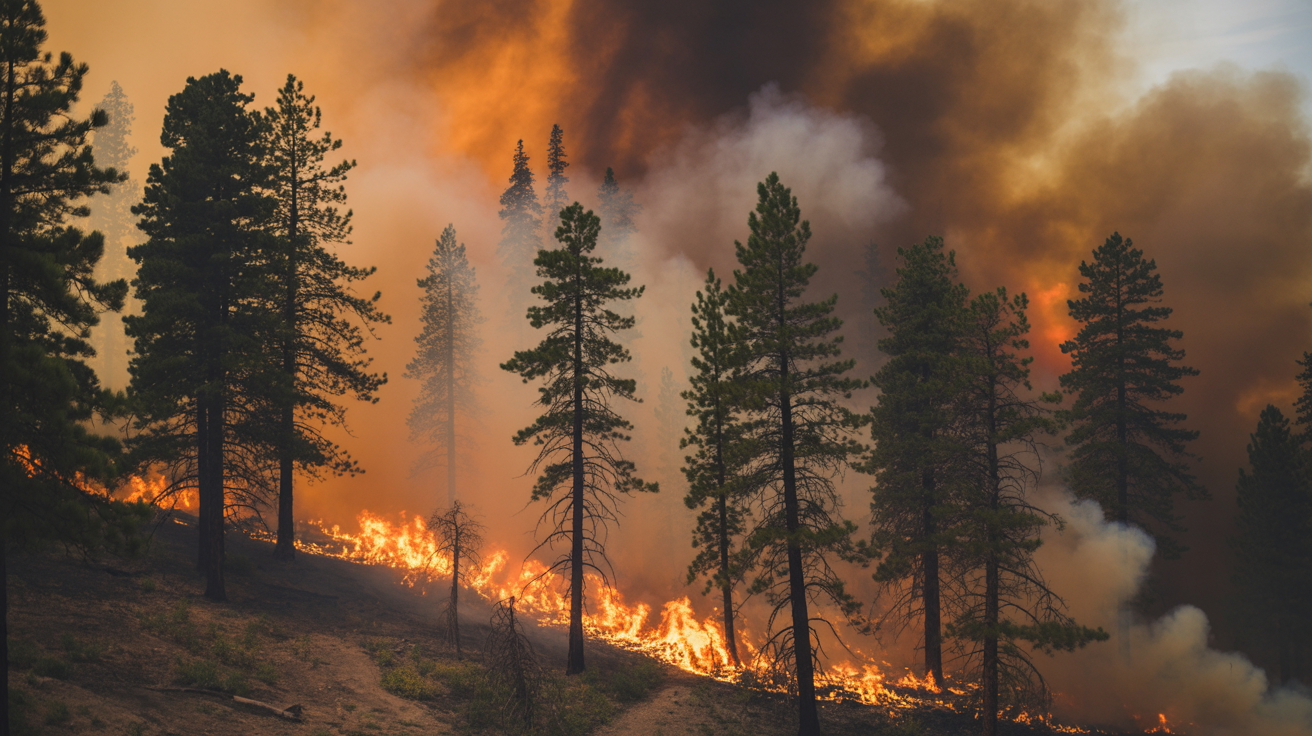
Fire Mitigation in Colorado Springs & Black Forest
Black Forest is one of the most fire-prone areas in Colorado. If you live here, fire mitigation isn't optional — it's essential. Protect your home, your neighbors, and your community.
The 2013 Black Forest Fire destroyed over 480 homes in just days. It didn't need a massive ignition source — it just needed the right conditions. Those conditions exist right now.
Serving Colorado Springs, Black Forest, Woodland Park, Monument & El Paso County • Since 1976 • ISA Certified Arborists
Red Flag Warnings are issued week after week in our area. That's not random — it's a sign of just how ready our environment is to burn.
Why Black Forest & Colorado Springs Are at Extreme Risk
Our area has all the ingredients for a catastrophic wildfire. Understanding the risks is the first step to protecting your property.
Dense Ponderosa Pine Forests
Black Forest contains thousands of acres of dense Ponderosa pine — highly flammable and interconnected, creating a continuous fuel bed across neighborhoods.
Beetle Kill & Deadfall
Mountain pine beetle infestations have left thousands of dead, dry standing trees throughout El Paso County — perfect kindling for wildfire.
Dry Conditions & High Winds
Colorado Springs regularly experiences Red Flag Warnings — low humidity and strong winds create conditions where a single spark can become a catastrophic fire.
Homes in Heavy Tree Coverage
Many Black Forest properties were built nestled within heavy tree coverage, with little to no defensible space separating structures from dense fuel.
What Most People Don't Realize About Wildfire
Wildfires don't just spread through flames. They spread through four types of fuel — and your property may be contributing to the risk without you even knowing.
Ground Fuels
Pine needles, dead leaves, brush, and debris on the forest floor ignite first and spread fire rapidly along the ground toward structures.
Ladder Fuels
Low-hanging branches and shrubs act as "ladders" that carry ground fire up into the tree canopy — where fire becomes catastrophic.
Crown Fires
Once fire reaches the treetops, it jumps from tree to tree at devastating speed. Crown fires are nearly impossible to control.
Ember Travel
Burning embers can travel over a mile ahead of the fire front, igniting new spot fires on rooftops, decks, and dry vegetation far from the main blaze.
Your property may not start the fire — but it can absolutely help it spread.One overgrown property can put an entire neighborhood at risk.
The Three Zones of Defensible Space
Defensible space is the buffer between your home and approaching wildfire. Following Colorado State Forest Service guidelines, we create protection in three critical zones.
Zone 1
0–15 feet from structure
The most critical area. Remove all dead vegetation, store firewood at least 30 feet away, keep gutters clear, use non-combustible materials for decks and siding within 5 feet, and maintain mowed, irrigated landscaping.
Zone 2
15–100 feet from structure
Thin trees so canopies are spaced 10+ feet apart. Remove ladder fuels by pruning lower branches up to 10 feet high. Clear dead wood and debris. Create fuel breaks with gravel paths or driveways.
Zone 3
100–200 feet from structure
Thin trees to reduce density. Remove dead and beetle-killed trees. Prune lower branches. This zone slows an approaching wildfire and reduces ember generation, giving firefighters a fighting chance.
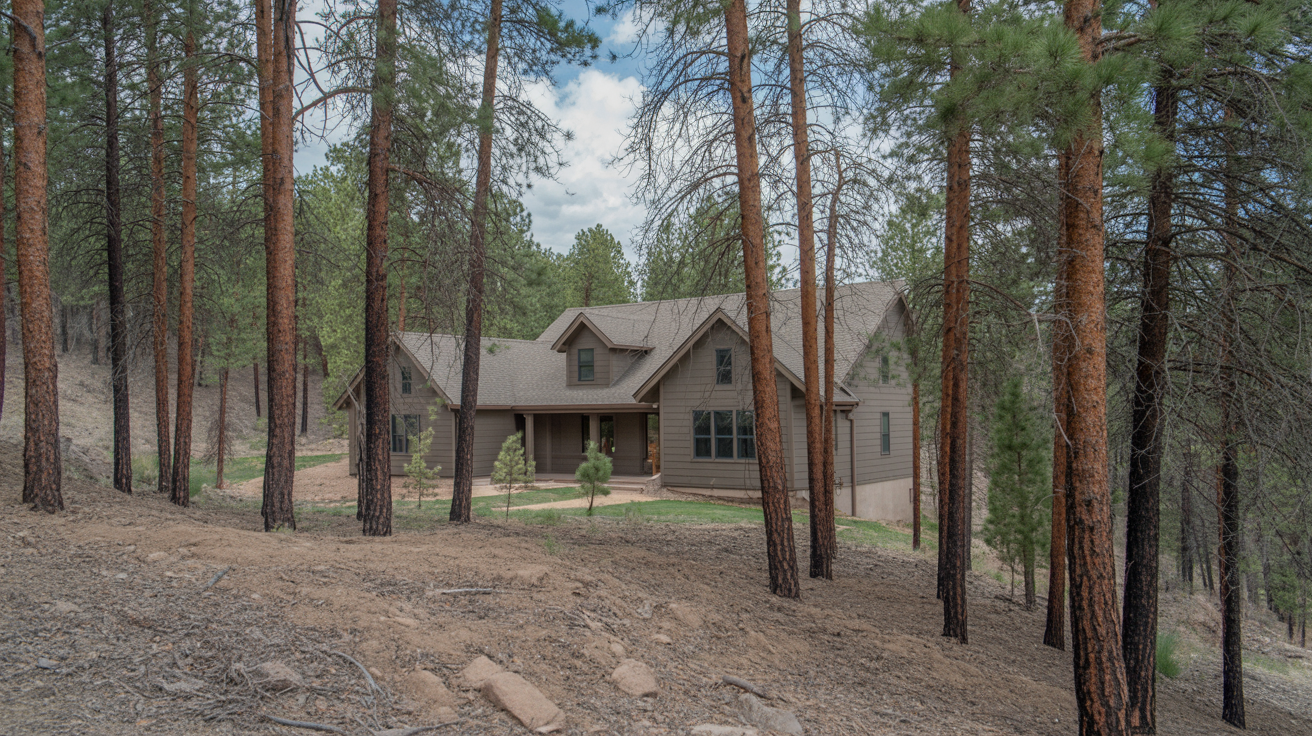
Properly mitigated property with defensible space — thinned trees, cleared brush, and fire-safe zones
What Fire Mitigation Actually Does
Proper mitigation gives firefighters a chance to defend your property instead of losing it. Here's what our certified team does to reduce your risk:
- Removes dead, diseased, and beetle-infested trees
- Creates defensible space around your home per Colorado State Forest Service guidelines
- Reduces ground fuel — brush, pine needles, and deadfall
- Eliminates ladder fuels so fire can't climb into the canopy
- Thins dense tree stands to slow or stop fire spread
- Gives firefighters a chance to defend your property instead of losing it
- May qualify your property for insurance premium reductions
- Protects property value and your investment
Your Home & Family
One unmaintained property becomes the launch point for fire that threatens your home — and every home connected by fuel.
Your Neighbors & Community
In areas like Black Forest, properties are connected by fuel. Fire doesn't respect property lines. Your mitigation protects everyone around you.
Your Liability
If an unmaintained property contributes to fire spread, there can be serious legal and financial consequences. Mitigation is responsible property ownership.
Your Insurance
Colorado HB 24-1175 encourages insurance companies to offer premium discounts for properties with completed fire mitigation. Protect your home AND your wallet.
We've Seen What Can Happen
The Black Forest Fire wasn't ancient history — it was 2013. And the conditions that caused it haven't gone away.
489
Homes Destroyed
14,280
Acres Burned
2
Lives Lost
The Black Forest Fire started on June 11, 2013, and became the most destructive wildfire in Colorado history at that time. Fueled by dense Ponderosa pine, beetle-kill deadfall, drought conditions, and powerful winds, it destroyed over 480 homes in a matter of days. It didn't need a massive ignition source — it just needed the right conditions. Those same conditions exist in Black Forest right now.
We Live Here Too
At Mr. Stump Tree Service, we're not just working in Black Forest and Colorado Springs — we're part of this community. We've walked these properties. We've seen the risk firsthand. And we know what it takes to reduce it.
Fire Mitigation FAQs
Common questions about wildfire mitigation in Colorado Springs and Black Forest.
How much does fire mitigation cost in Colorado Springs?
Fire mitigation costs vary significantly based on property size, tree density, and the level of work needed. Small residential lots may start around $1,000–$3,000, while larger Black Forest properties with dense overgrowth can range from $5,000–$15,000+. We provide free on-site assessments with detailed written estimates — no obligation.
What is defensible space and why is it important in Black Forest?
Defensible space is the buffer zone between your home and surrounding wildfire-prone vegetation, divided into three zones (0–15 ft, 15–100 ft, and 100–200 ft). In Black Forest — one of Colorado's most fire-prone areas with dense Ponderosa pine — defensible space is critical. It slows fire progression, reduces radiant heat exposure, and gives firefighters a fighting chance to save your home. The 2013 Black Forest Fire destroyed over 480 homes, many of which lacked adequate defensible space.
How often should fire mitigation be done on my property?
We recommend a professional fire mitigation assessment annually, with full mitigation work every 2–3 years depending on regrowth and conditions. Colorado's dry climate, beetle kill, and wind-blown debris cause fuel to accumulate rapidly. Annual inspections catch new hazards before they become dangerous. Many fire departments and insurance companies also recommend annual assessments.
Can fire mitigation help lower my insurance premiums?
Yes. Colorado HB 24-1175 encourages insurance companies to offer reduced premiums for properties with documented fire mitigation. Some insurers already offer 5–15% discounts for completed defensible space work. We provide documentation and before/after photos that you can submit to your insurance company as proof of mitigation.
What areas do you serve for fire mitigation?
We provide fire mitigation services throughout Colorado Springs, Black Forest, Woodland Park, Monument, Palmer Lake, Falcon, Peyton, and all of El Paso County. Black Forest and the Highway 83 corridor are our highest-priority areas due to extreme fire risk.
What is the difference between fire mitigation and tree removal?
Fire mitigation is a strategic, comprehensive approach focused on reducing wildfire risk across your entire property — including tree thinning, brush clearing, ladder fuel removal, and creating defensible space zones. Tree removal is simply taking down individual trees. Effective fire mitigation requires understanding fire behavior, fuel types, and Colorado State Forest Service guidelines. We're specialists in both.
Is the Black Forest area still at high fire risk?
Absolutely. Despite the devastating 2013 Black Forest Fire, the area remains one of Colorado's highest wildfire risk zones. Dense Ponderosa pine regrowth, continued beetle kill, increasing drought conditions, and expanding development have maintained — and in some cases increased — the fire danger. Red Flag Warnings are issued regularly during fire season. Annual mitigation is essential, not optional.
Do you follow Colorado State Forest Service guidelines?
Yes. All of our fire mitigation work follows Colorado State Forest Service (CSFS) guidelines for defensible space creation. Our team is experienced in proper zone-based mitigation, species-specific thinning, and fuel reduction techniques recommended by the CSFS and local fire departments.
If You've Been Thinking About It… Now Is the Time
Fire mitigation isn't something to wait on. With conditions changing weekly, taking action now could make all the difference later.
If you'd like an honest assessment of your property, we're here to help. Protecting homes. Protecting land. Protecting our community.