Healthy trees are the backbone of a Colorado Springs landscape, but our trees face real threats from pests and diseases — many of which are made worse by drought stress. The good news is that most problems are far easier to manage when you catch them early. Here are the ones we see most often along the Front Range, and the signs to watch for.
Bark Beetles
Bark beetles are the most serious pest for our pines and spruces. Species like the mountain pine beetle, ips beetle, and spruce beetle bore under the bark and cut off the tree’s ability to move water and nutrients. Drought-stressed trees are especially vulnerable.
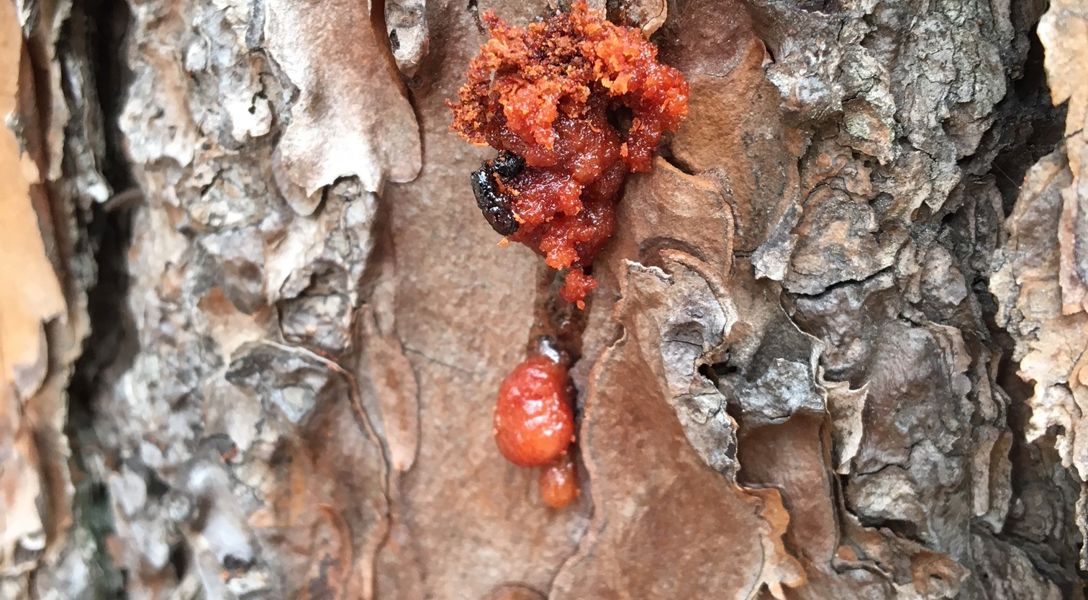
Watch for: popcorn-sized blobs of pitch (“pitch tubes”) on the trunk, fine sawdust in bark crevices or at the base, and needles fading from green to yellow to red. Once a tree fades, it usually can’t be saved — so protecting healthy neighboring trees becomes the priority.
Emerald Ash Borer
Emerald ash borer (EAB) has been confirmed in Colorado and is a major threat to ash trees. This metallic-green beetle’s larvae tunnel under the bark and kill ash trees within a few years.
Watch for: thinning canopy starting at the top, D-shaped exit holes about 1/8 inch across, S-shaped tunnels under the bark, and unusual woodpecker activity. If you have an ash tree, it’s worth having it evaluated — preventive treatment can protect valuable ash trees before they’re infested.
Fire Blight
Fire blight is a bacterial disease that hits crabapple, apple, pear, and mountain ash — all common ornamentals in Colorado Springs yards.
Watch for: branch tips that suddenly wilt and curl into a “shepherd’s crook,” blackened leaves that look scorched but stay attached, and oozing cankers on branches. Pruning out infected wood well below the visible damage — with sterilized tools — is key to stopping its spread.
Aspen Decline & Cytospora Canker
Aspens are beloved but tricky at our lower elevations, where heat and drought stress them. That stress opens the door to cytospora canker, a fungal disease.
Watch for: sunken, discolored patches on the bark, orange or black ooze, and branches dying back one at a time. Keeping aspens well-watered and mulched is the best defense, since the fungus mostly attacks already-stressed trees.
Spider Mites & Aphids
These tiny pests are more of a nuisance than a killer, but heavy infestations stress trees and shrubs. Spider mites thrive in hot, dry conditions — exactly our summers.
Watch for: stippled, dusty-looking leaves and fine webbing (mites), or sticky “honeydew” and curling leaves (aphids). A strong spray of water and proper watering often keeps them in check.
The Common Thread: Tree Stress
Notice a pattern? Nearly every one of these problems takes hold faster in stressed, thirsty trees. Proper watering (including winter watering), mulching, and correct pruning are your best long-term defense. A healthy tree can fight off a lot on its own.
Get an Expert Diagnosis
Pest and disease symptoms can look alike, and the right response depends on getting the diagnosis right. Mr Stump Tree Service has protected Colorado Springs trees since 1976, and our ISA Certified Arborists can identify what’s affecting your trees and recommend the right treatment — or removal, if that’s the safest path. Call us at (719) 481-2500 or request a quote online.
Frequently Asked Questions
How do I know if my pine tree has bark beetles?
Look for popcorn-sized pitch tubes on the trunk, fine reddish sawdust in the bark crevices or at the base, and needles fading from green to yellow to red. By the time the whole tree turns red the beetles have usually moved on, so early detection and protecting nearby healthy trees is important.
Is emerald ash borer in Colorado Springs?
Emerald ash borer has been confirmed in Colorado and continues to spread. If you own ash trees, it is wise to have them evaluated. Preventive treatments can protect healthy, valuable ash trees before they become infested.
Can a diseased tree be treated, or does it have to be removed?
It depends on the disease and how far it has progressed. Many issues like fire blight, aphids, and early canker can be managed with pruning, treatment, and improved care. Advanced infestations or structural decline may require removal. An ISA Certified Arborist can give you an honest assessment.
What is the best way to prevent tree pests and diseases?
Keep your trees healthy and unstressed. Proper watering (including winter watering during dry spells), a good layer of mulch, and correct pruning make trees far more resistant. Most serious pests and diseases target trees that are already weakened by drought or damage.
Need Professional Tree Care?
Our ISA Certified Arborists have been serving Colorado Springs since 1976. Free estimates, honest advice.