)
You had a tree taken down, the crew hauled away the trunk and branches, and now you’re staring at a stubborn stump sitting in the middle of your yard. It’s a name we take a little personally around here — we’re Mr Stump, after all. So let’s talk about what stump grinding actually involves, what it costs, and why it’s almost always worth doing.
What Is Stump Grinding?
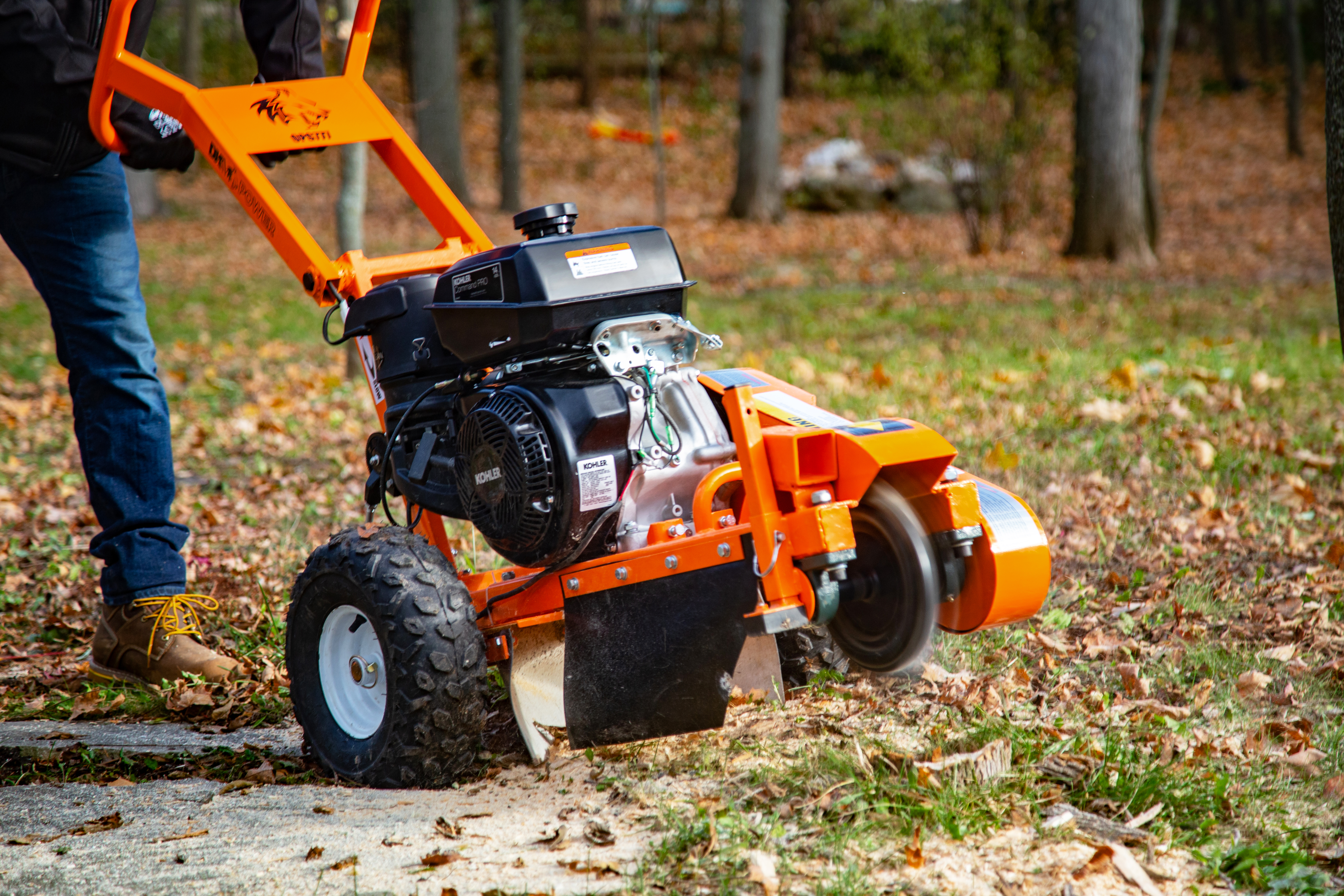
Stump grinding uses a machine with a rotating carbide-tipped wheel to chip a stump down into small wood shavings, usually to a depth of 4 to 12 inches below ground level. It’s different from full stump removal, which digs out the entire root ball and leaves a large crater. Grinding is faster, less disruptive to the surrounding soil and lawn, and far more affordable — which is why it’s the option most Colorado Springs homeowners choose.
What to Expect During the Job
1. We assess access and hazards
Before firing up the grinder, our crew checks for fences, sprinkler lines, utility markings, and how much room we have to maneuver the machine. Grinders range from compact walk-behind units that fit through a standard gate to larger machines for big pine and cottonwood stumps.
2. The grinding itself
Most residential stumps take anywhere from 15 minutes to an hour. A small ornamental stump goes quickly; a wide ponderosa pine or a decades-old elm can take considerably longer because of the root flare and the density of the wood.
3. Cleanup and grindings
Grinding produces a surprising volume of wood chips — often enough to mound well above the original stump. We rake the grindings back into the hole, and you can leave them to settle, use them as mulch, or have us haul them away. The mixture of wood and soil will settle over a few weeks, so topping it off with soil and grass seed is a good follow-up.
What Affects the Cost?
There’s no single flat rate, because every stump is different. The biggest factors are:
- Diameter: Stumps are often priced by the inch across the widest point. A 12-inch stump is a quick job; a 40-inch cottonwood is a project.
- Wood species and hardness: Hardwoods and old, dense stumps grind slower than soft pine.
- Root spread: Some trees send out surface roots that also need grinding if you want to plant or lay sod.
- Access: A stump in an open front yard is easier (and cheaper) than one crammed behind a locked gate on a slope.
- Grinding depth: Standard depth is enough for grass; planting a new tree or pouring concrete calls for deeper grinding.
Because our standard service minimum is $425, grinding a single small stump on its own can feel pricey per stump — but if you have several, or you’re already having removal work done, adding grinding is very cost-effective.
Why Not Just Leave the Stump?
A stump might look harmless, but leaving it in the ground causes real headaches over time:
- Pests: Decaying stumps attract carpenter ants, termites, and beetles — which you don’t want near your home.
- Regrowth: Many species, especially elm, cottonwood, and aspen, send up suckers from the stump and roots for years.
- Trip hazards and mowing obstacles: A hidden stump is easy to catch a mower blade or an ankle on.
- Wasted space: You can’t plant, build, or landscape cleanly around a stump.
Trust the Local Experts
Mr Stump Tree Service has been grinding stumps across Colorado Springs, Black Forest, Monument, and the surrounding communities since 1976. Our ISA Certified Arborists and experienced crews handle everything from a single backyard stump to full lot clearing — and we’re fully licensed and insured. If that leftover stump is bugging you, call us at (719) 481-2500 or request a quote online and we’ll take care of it.
Frequently Asked Questions
How deep do you grind a stump?
Standard grinding goes 4 to 12 inches below grade, which is plenty for laying sod or seeding grass. If you plan to plant a new tree or pour a patio or foundation over the spot, we can grind deeper on request.
What happens to the wood chips left behind?
Grinding produces a pile of wood shavings mixed with soil. You can keep them as free mulch, spread them out, or we can haul them away. The material settles over a few weeks, so adding topsoil and grass seed afterward gives the best result.
Will the tree grow back after grinding?
Grinding removes the stump and the buds that would sprout from it, so the tree itself will not regrow. Some species can send up suckers from leftover surface roots, but those are easy to mow off and eventually die out without the stump to feed them.
Can you grind a stump close to my house or fence?
In most cases yes. Our grinders come in different sizes, including compact units for tight spaces near foundations, fences, and gates. We always check for sprinkler lines and utilities before we start.
Need Professional Tree Care?
Our ISA Certified Arborists have been serving Colorado Springs since 1976. Free estimates, honest advice.