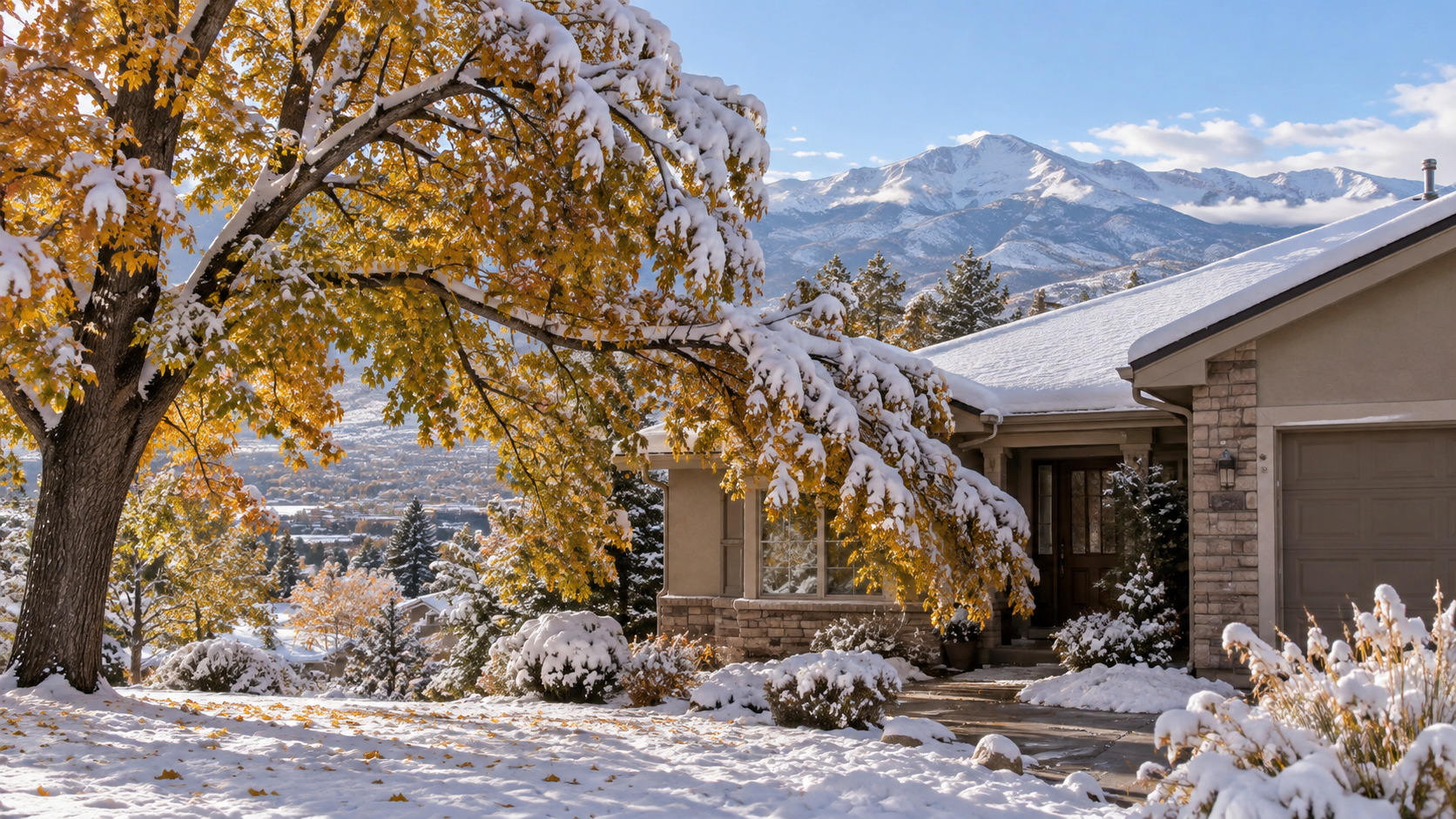
Anyone who has lived in Colorado Springs for a few years has seen it: a heavy, wet snow arrives in October or early spring while the trees are still full of leaves. Every leaf catches snow, the weight piles up fast, and by morning there are broken limbs across driveways, fences, cars, and power lines. The good news is that most of that damage can be prevented — or at least greatly reduced — with a little preparation before the storms hit.
Why Early Snow Is So Hard on Front Range Trees
Snow on a bare winter tree mostly falls through the branches. Snow on a tree that still has its leaves is a different story. The leaves act like thousands of tiny shelves, and wet Front Range snow is heavy. A large shade tree can end up holding a tremendous amount of extra weight in just a few hours.
Some trees handle it better than others. In our area, we most often see snow breakage in:
- Siberian elm — fast-growing with brittle wood and weak branch unions.
- Silver maple and cottonwood — large, fast-growing trees that tend to drop big limbs.
- Ornamental pears and crabapples — tight, upright branch angles that split under load.
- Pines and spruces — evergreens hold snow all season, so long, heavy limbs and leaning trees are at risk.
- Trees with co-dominant trunks — two trunks growing in a tight “V” are one of the most common failure points we see after a storm.
Before the Storm: 5 Ways to Get Your Trees Ready
1. Have weak and dead limbs removed
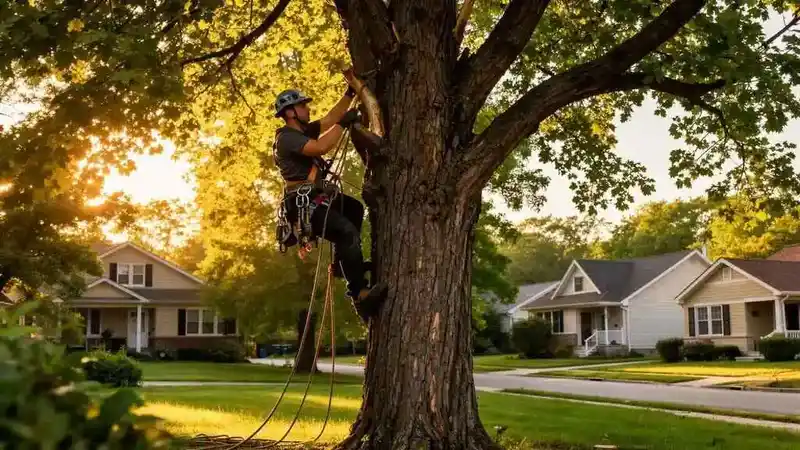
Dead branches, cracked limbs, and long, heavy limbs extending over the roof or driveway are the first to fail. Removing them on your schedule is far cheaper — and safer — than an emergency call after they come down. Late fall and winter are an excellent time to prune most trees, because they are dormant and it is easier to see the branch structure. (See our guide on the best time to trim trees in Colorado Springs.)
2. Thin dense canopies the right way
Proper thinning by a trained arborist reduces how much snow a tree can catch without harming its health. This is not the same as “topping,” which actually makes trees weaker and more likely to break in future storms. Ask for structural pruning and crown thinning to industry standards.
3. Check for weak branch unions and cracks
Look up at your trees. Tight V-shaped forks, cracks where two trunks meet, or old wounds with decay are warning signs. In some cases, cabling or bracing can add support to a valuable tree. In others, the safest answer is removal. Our list of warning signs a tree needs to be removed can help you spot problems.
4. Keep limbs clear of your roof and power lines
Branches touching or hanging over your roof are a risk in every snowstorm. Limbs near the service line to your house should only be handled by professionals. Never prune near power lines yourself.
5. Water your trees before the ground freezes
A well-watered tree is a stronger tree. Dry falls are common here, and drought-stressed wood is more brittle. A deep watering in late fall, plus occasional watering on warm, dry winter days, makes a real difference. Our winter watering guide explains how and when.
During the Storm: What to Do (and What Not to Do)
- Gently brush off snow you can safely reach. Use a broom and push upward on the branch to lift the snow off. Pushing down adds stress and can snap the limb.
- Do not shake the tree or hit the branches. Frozen branches are brittle and can break suddenly.
- Leave ice alone. If branches are coated in ice, trying to remove it does more harm than good. Let it melt naturally.
- Stay out from under loaded trees. Do not park cars or walk under heavily bent limbs until the snow melts off.
- Stay far away from downed power lines. Assume every downed line is live and call Colorado Springs Utilities or your electric provider right away.
After the Storm: Assess Before You Act
Once the snow melts, walk your property and look for hanging or partly broken limbs (often called “widow makers”), split trunks, and trees that have started to lean. Many bent branches will spring back on their own once the weight is gone, so do not rush to cut them. A broken limb that is hanging in the canopy, however, is a serious hazard and should be removed by a professional with the right equipment.
For a step-by-step checklist after a storm, see our article on what to do when storms damage your trees. If a tree or limb is on your house, car, or blocking your driveway, our emergency tree service can help.
Get Your Trees Winter-Ready
Mr Stump Tree Service has been caring for Colorado Springs trees since 1976. Our ISA Certified Arborists can walk your property, point out the limbs most likely to fail this winter, and give you a free, no-obligation estimate for tree trimming or removal. Call us at (719) 481-2500 or request a free estimate online.
Frequently Asked Questions
Should I knock snow off my trees?
Yes, if you can reach it safely from the ground. Use a broom and gently push upward on the branch to lift the snow off. Never shake the tree, hit the branches, or try to remove ice, because frozen branches are brittle and can snap.
Which trees in Colorado Springs are most likely to break in snow?
Siberian elm, silver maple, cottonwood, ornamental pear, and trees with two trunks growing in a tight V-shape are the most common failures we see. Evergreens like pine and spruce are also at risk because they hold snow all winter.
Is it OK to prune trees in late fall and winter?
For most trees, yes. Late fall and winter are when trees are dormant, which makes it a great time for structural pruning and removing weak or dead limbs before heavy snow. An ISA Certified Arborist can tell you if any of your trees should be pruned at a different time of year.
Will a bent branch recover after the snow melts?
Often, yes. Many flexible branches spring back once the weight is gone, so wait until the snow melts before cutting anything. Branches that are cracked, split, or hanging broken in the tree should be removed by a professional.
Need Professional Tree Care?
Our ISA Certified Arborists have been serving Colorado Springs since 1976. Free estimates, honest advice.